Project Details
Timeframe: 2 weeks
Client: Divergent 3D
Role: UX/UI Designer
Team: Natalie Resendiz, Yulu Shi, Ruben Baez, Simone Wojtaszek
Tools: Adobe XD, Pen and Paper, Google Forms, OptimalSort
Platform: iOS Mobile
The Company
Divergent 3D is a 3D printing company that specializes in 3D printed car parts.
The Challenge
Tech savvy car buyers want an aspirational relationship with car brands/styles. But concept cars are expensive/impractical to produce. How can we create alternative ways of engaging consumers and create a concept car-like experience using AR?
The Solution
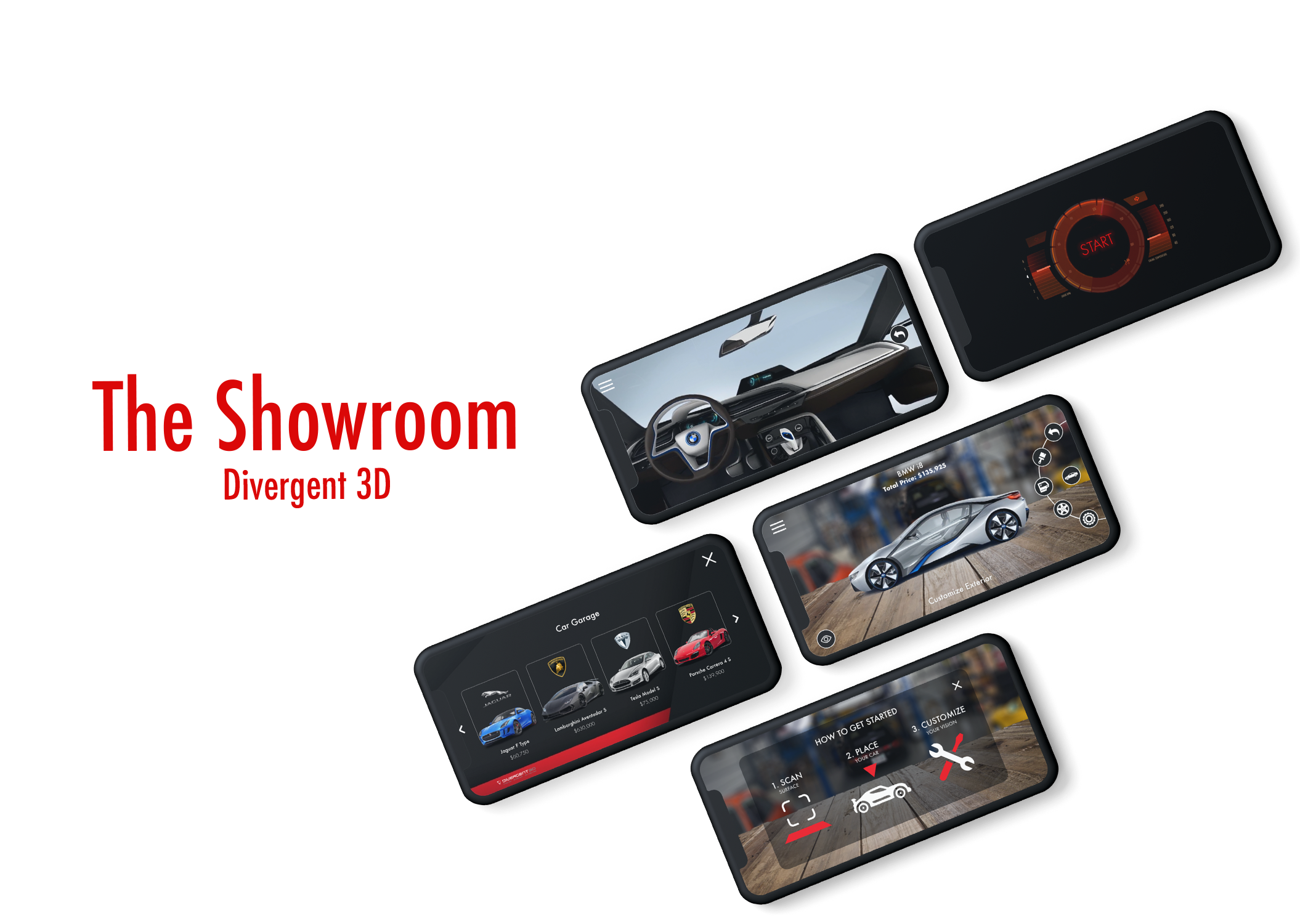
We designed an app that will help create new and exciting ways for car enthusiasts to engage with car manufacturers. The app is a white label meaning it is customizable by car manufacturer. The app will also show Divergent’s signature 3D printed car parts.
Research
Surveys
User Interviews
Survey Says..
We conducted surveys using Google Forms emailed to friends and family, posted on Slack, and posted on Reddit car enthusiast forums. Each survey polled 17 participants.
The first survey’s purpose was to generally understand the car buying process. We sent the survey to car owners ages 22-52 in the LA area and asked questions regarding:
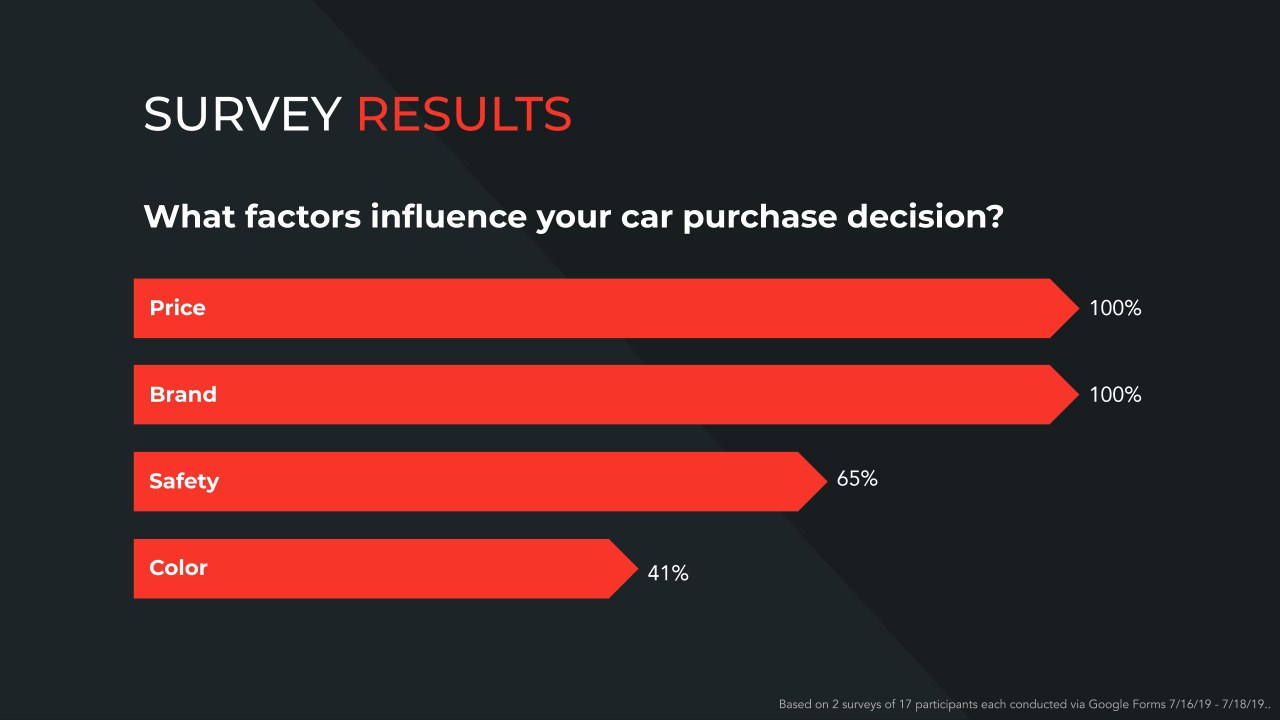
What factors influence users’ car purchase decisions
Where users typically purchase cars (dealership, online, etc)
How users can research potential cars to buy
Whether users test drive before purchasing a car
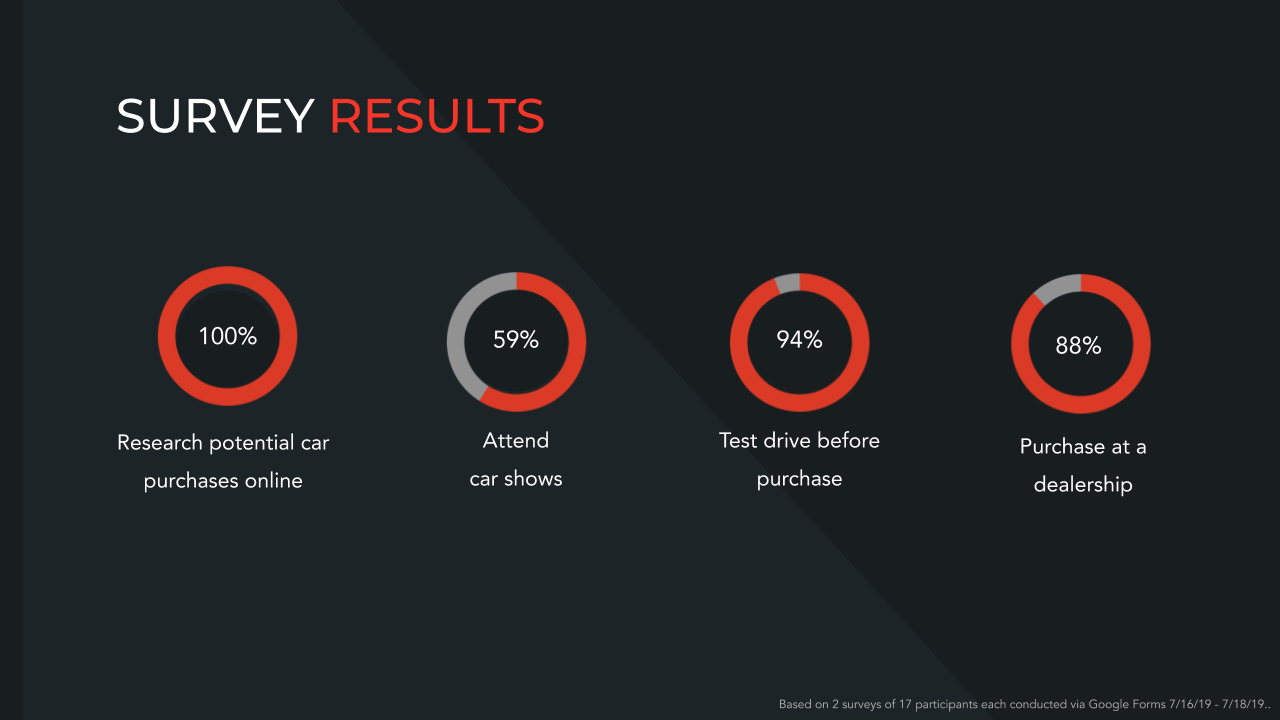
We found that 100% of users do their own research before purchasing a vehicle. 100% of users research potential cars online, 47% ask friends, and 41% visit a dealer as part of the research process. 16 out of 17 participants test drove a vehicle.
Key factors of a purchase were price and color. The top 3 features that users researched were technology, appearance and engine models/specs.
User Interviews to Create the frame for our Learning Course
To transfer the information from a book to an e-learning course I wanted to better understand our users.
We sought out tech-savvy car enthusiasts from our social networks and interviewed 6 people via phone.
Our interview goals were to:
Understand how technology influences car purchasing decisions
Understand car enthusiast’s emotional connections to car brands
Evaluate users’ experiences with current car AR sites/apps/exhibits
We need to present information clearly, create interactions with the course, and provide structure.

“I hate going to the dealership and dealing with pushy salespeople.”
“I think it’s important to make the pricing very clear. I hate being surprised by hidden fees.”


““I want to customize the color, interior, design, and add-ons in AR.””
Synthesis
A-HA moment!
Personas
A-HA! The Life Cycle of a Car Enthusiast
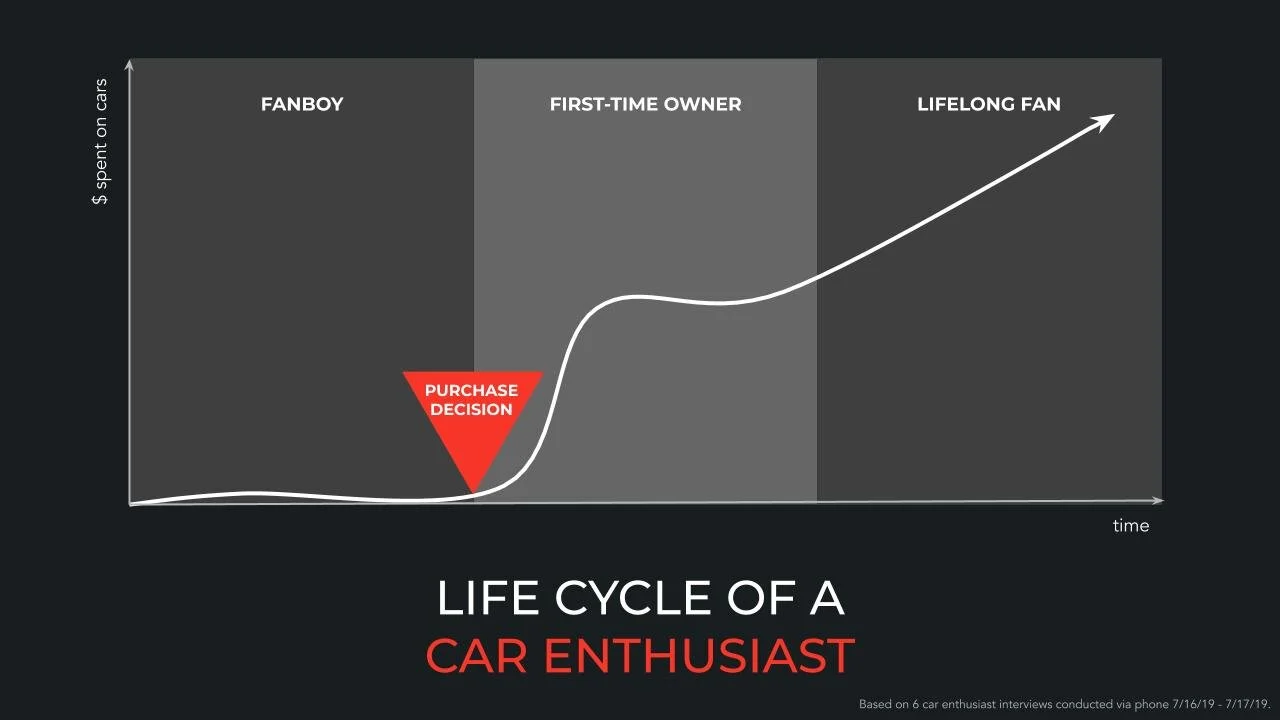
Gathering insights from user interviews, it became apparent that a car enthusiast's relationship with a car brand evolves over time.
This graph shows how much $ car enthusiasts spend over time.
We want to engage consumers right when they decide to buy their first luxury car, when they’re looking to fall in love with one brand. This is our chance to capture that enthusiast and convert them from a fanboy into a lifelong fan.
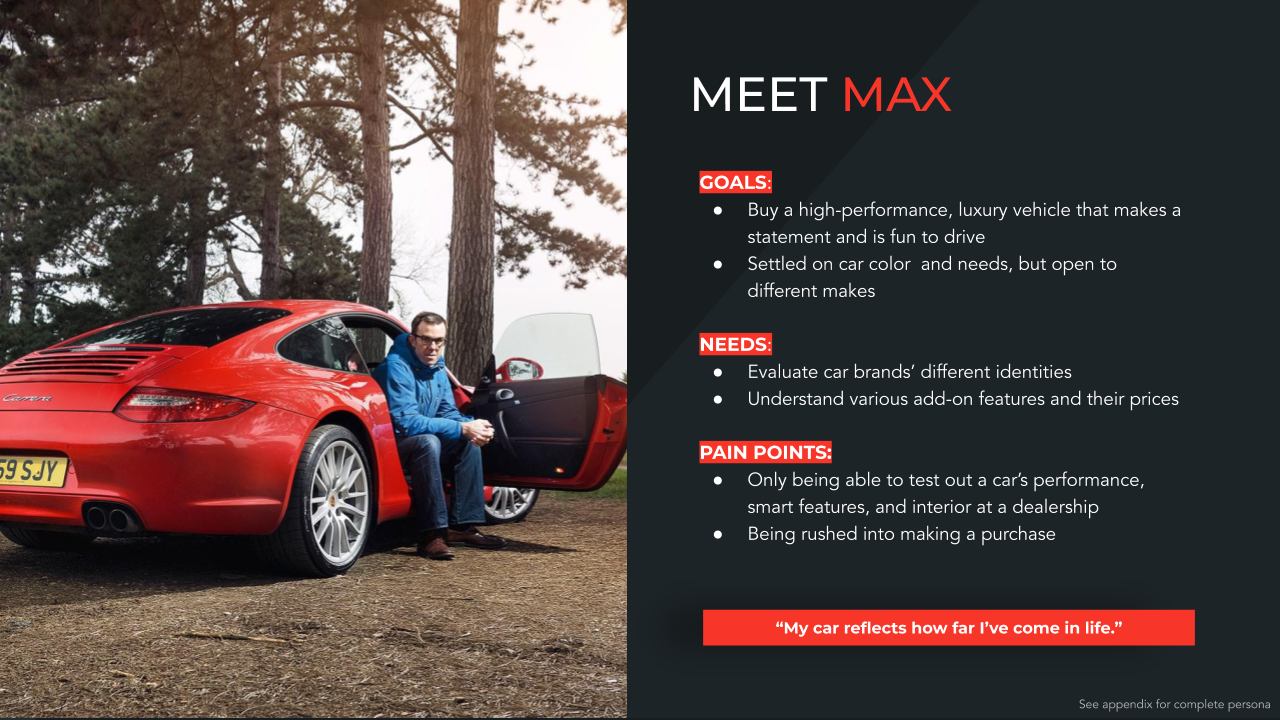
Max Momentum
Utilizing these insights we found Max Momentum
Design
Feature Prioritization
Design Studio
When prioritizing features to include in our app, we had to consider multiple audiences: Car Enthusiasts and Divergent 3D
We prioritized features that were critical for BOTH users and stakeholders. These must-haves included:
Browse car models
Change paint colors
Cockpit view (interior)
Rotate 360 degrees
View concept cars
Specs
About Divergent 3D section
“White label” (customizable by car brand)
We did not include features that were important for EITHER the user or the stakeholder in our final design.
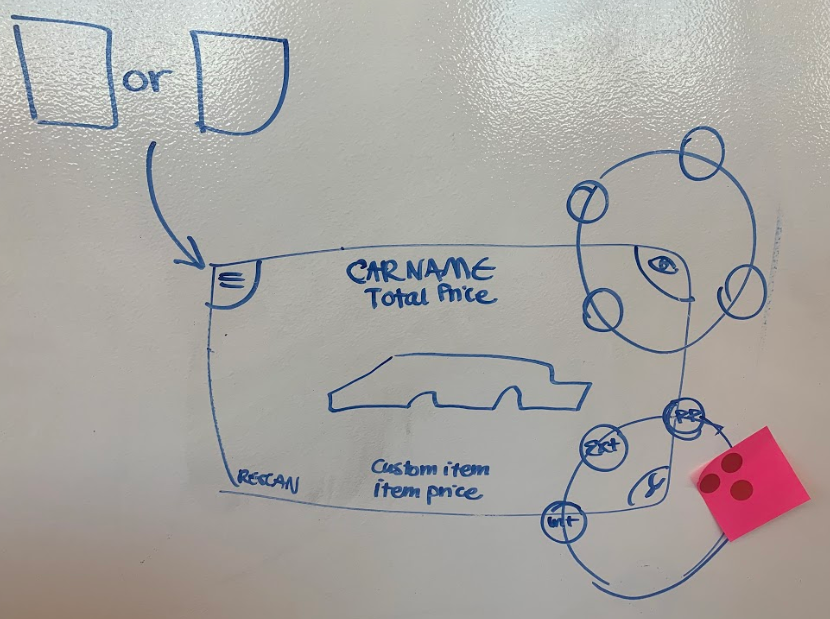
We started the design process with a design studio:
CREATE: Each designer had 5 minutes to draw up as many design solutions as possible.
PITCH: We then presented and advocated for our designs for 3 minutes each.
CRITIQUE: Finally for 2 minutes we analyzed each others' design solutions, identifying features and designs that we thought worked best for the client.
Prototype
Usability Testing
The Evolution of Testing Our Prototypes
Car enthusiasts expressed their hatred for going to the car dealership, so I asked what might be the best way to have them engage with cars on their own terms without the haggling?
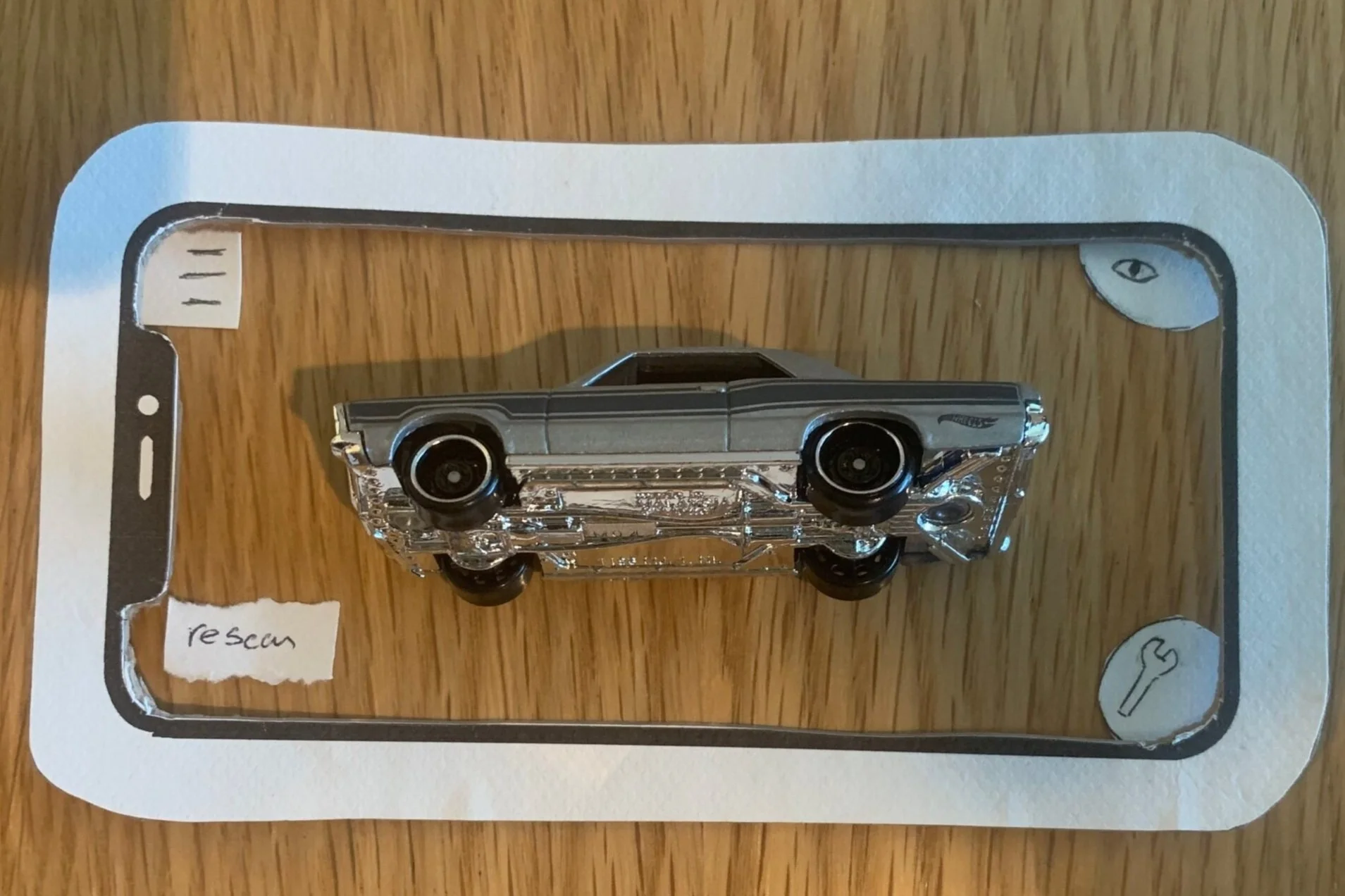
To utilize the most of the screen space, testing a floating menu on only the corners of the screen was the first step of testing as this is common in AR apps.
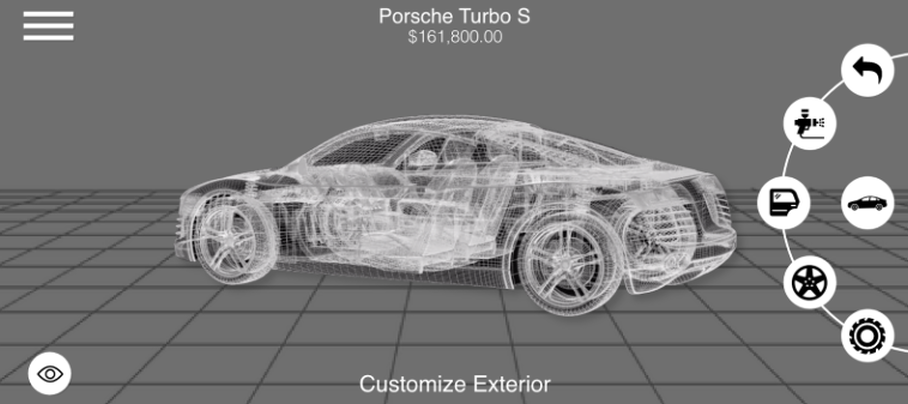
Our menu was intuitive to users, but our icons were confusing! How do we make icons understable to more than just car enthusiasts?
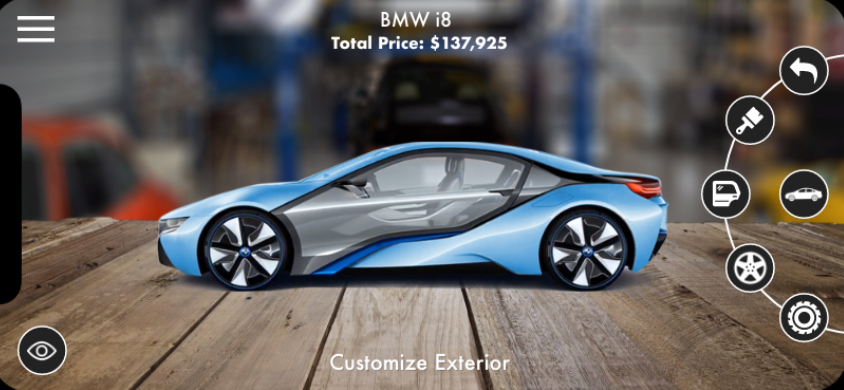
With new icons, clear pricing and an intuitive menu our AR app was ready for a last round of testing with minimal changes made to the hi-fidelity prototype.
Walk-Through
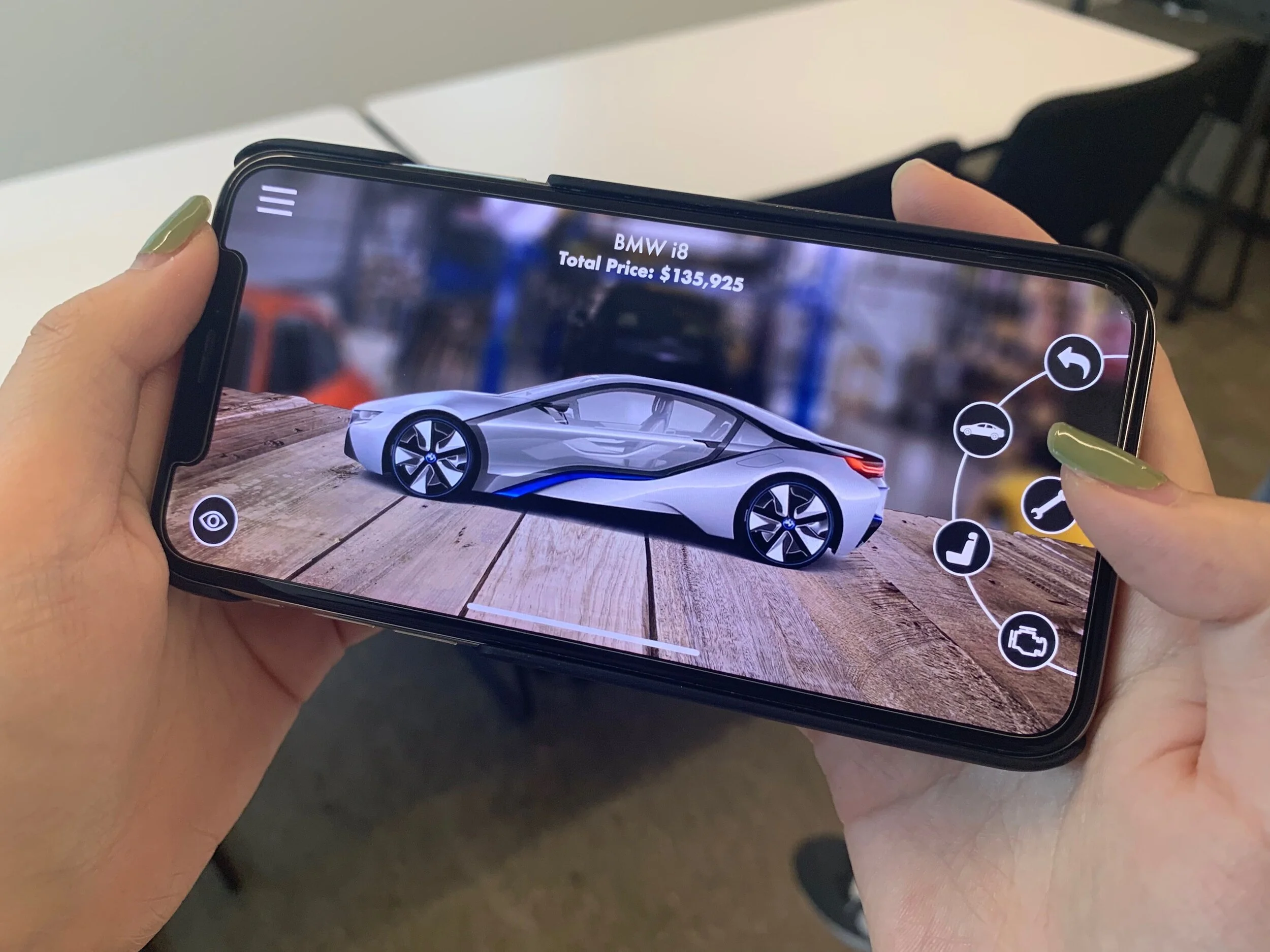
Our users really found our app to be fun but also learned more about Divergent 3D parts. Through testing and research we found that car customization makes car shopping fun. We also found that price is a key aspect of the shopping process which can be the most frustrating when at the dealership.
Next Steps
Allow manufcaturer customization
Showcase more Divergent 3D parts
Since I had no previous experience with AR. Researching other competitors and the capabilities of AR turned out to be the most beneficial part of this project. It is so important to do research to make sure you’re aware of your capabilities and what might already exist.